


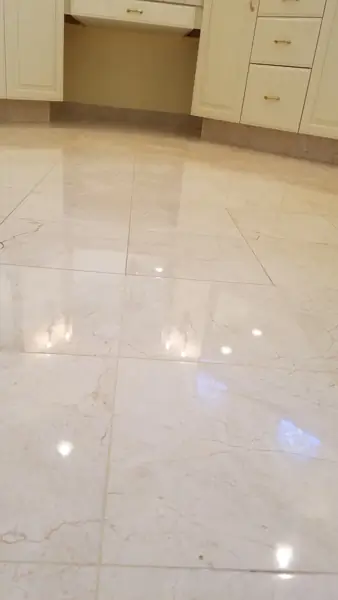
How Marble Restoration Transforms Your Home's Value
TL;DR: Marble doesn't wear out the way tile or carpet does - it dulls, etches, and scratches at the surface while the stone underneath stays sound. Professional restoration removes that damaged top layer and re-polishes the stone, so a floor or countertop that looks tired can be brought back to showroom condition. For homeowners across the Coachella Valley, that often means stronger first impressions, better listing photos, and real perceived value - usually at a fraction of replacement cost.
Marble is one of the few finishes in a home that can look worse than the day it was installed and still be completely salvageable. Buyers and appraisers respond to what they see and touch, and few things read as "neglected luxury" faster than a clouded marble entry or an etched bathroom vanity. The good news: that perception is reversible. Restoration works with the stone you already own instead of tearing it out.
This guide explains how marble degrades, what restoration actually does, and where the value shows up - whether you're selling next quarter or planning to enjoy the home for another decade.
Why does marble lose its shine in the first place?
Marble loses its shine because it's a soft, calcium-based stone that reacts to everyday acids and abrasion. Wine, citrus, coffee, and many cleaners etch the surface, leaving dull spots that no amount of mopping fixes. Foot traffic and grit slowly scratch the polish. The shine fades from the top down - not from deep within.
That distinction matters. Etching and dullness live in the first fraction of a millimeter of the stone. Below that thin worn layer, the marble is typically as solid as the day it was quarried. This is why a slab that looks ruined to a homeowner often looks like a routine job to a restoration crew: the fix isn't replacement, it's removing the damaged surface and re-establishing the finish.
In desert homes, the problem compounds. Fine sand tracked in from patios and golf courses acts like sandpaper underfoot, and hard water leaves mineral film on showers and vanities. None of this is a structural failure - it's surface history t0hat restoration can erase.
What does professional marble restoration actually involve?
Professional marble restoration is a multi-stage process of grinding, honing, and polishing that physically removes damage and rebuilds the finish. Technicians use progressively finer diamond abrasives to level scratches and etch marks, then refine the surface to the desired sheen, and finally seal the stone to resist future staining.
Here's how the stages break down in plain terms:
- Grinding (flattening): Used when there's lippage between tiles or deep damage. Heavy diamond abrasives bring the surface to a single flat plane.
- Honing: Successively finer abrasives erase scratches and etching and set the base smoothness.
- Polishing: The surface is brought up to the chosen finish - high-gloss, satin, or matte - using fine powders or pads.
- Sealing: A penetrating sealer is applied so spills bead instead of soaking in, buying time to wipe them up.
The same sequence applies whether the marble is a foyer floor, a fireplace surround, a shower, or a countertop. What changes is the equipment, dust containment, and the finish level the homeowner wants. Done correctly, the result isn't a coating sitting on top of the stone - it's the real marble surface, refreshed.
How does restored marble add value to a home?
Restored marble adds value mainly through perception and condition, two things buyers and appraisers weigh heavily. Clean, glossy stone signals a well-maintained home, photographs beautifully in listings, and removes an objection before it forms. Compared with full replacement, restoration delivers that lift at a far lower cost and with far less disruption.
Think about how value actually gets decided. An appraiser notes condition and quality of finishes. A buyer forms an emotional read in the first sixty seconds of a walkthrough. A listing photo either invites a showing or gets scrolled past. Marble that gleams works in your favor on all three fronts; marble that looks cloudy and scratched works against you on all three - even when the rest of the home is immaculate.
There's also a cost-avoidance angle. Ripping out and replacing natural stone is expensive, messy, and risks damaging surrounding cabinetry, drywall, and trim. Restoration sidesteps all of that. For most homes across Palm Springs, Rancho Mirage, and La Quinta, refreshing existing marble is the higher-return move precisely because the stone is already there and already paid for.
Restoration vs. replacement: which makes sense for value?
Restoration almost always wins on value when the marble is structurally sound, which is the most common scenario. Replacement only pulls ahead when the stone is cracked through, heavily missing pieces, or you specifically want a different material. For dullness, etching, scratches, and lost polish, restoration delivers the same visual result for a fraction of the investment.
A simple way to decide:
- Choose restoration when the damage is cosmetic - dull patches, etch marks, light scratches, worn polish, minor chips. This covers the vast majority of "my marble looks terrible" situations.
- Consider replacement when tiles are cracked across their full thickness, large sections are broken or missing, or the layout itself no longer suits the home.
Before committing to a tear-out, it's worth having the stone evaluated. What looks like permanent ruin to an owner is frequently a one-day restoration job. A professional marble restoration assessment can tell you which camp your floors and counters fall into before you spend a dollar on demolition.
Where marble restoration delivers the biggest payback
The highest-impact areas are the surfaces buyers see first and use most: entries, kitchen and bath counters, and master showers. These are the spaces that anchor a buyer's impression and appear in the photos that drive showings. Restoring them concentrates your effort where perceived value moves the most.
- Foyer and entry floors set the tone the moment the door opens.
- Kitchen counters and islands are the single most scrutinized surface in many sales.
- Master bath vanities and showers read as luxury when crisp, and as deferred maintenance when filmed and etched.
- Fireplace surrounds and accent walls are smaller jobs with outsized visual return.
You don't always need to restore every square foot. A targeted refresh of the high-visibility surfaces often delivers most of the impression-level benefit.
How long does restored marble stay looking good?
Restored marble can hold its finish for years with simple care, because the work re-establishes the real stone surface rather than masking it. Longevity depends on traffic, whether the stone was sealed, and day-to-day habits - using stone-safe cleaners, wiping acidic spills quickly, and keeping grit off the floor with mats at entrances.
For desert households, the two biggest enemies are sand and acidic spills. Walk-off mats at patio doors, felt pads under furniture, and prompt cleanup of citrus or wine go a long way. Periodic re-sealing keeps the stone resisting stains. With that light maintenance, a single restoration can carry a home comfortably through a sale or several more years of daily life before any touch-up is needed.
Restore the marble you already own
Before you price out demolition or new slabs, find out what your existing stone is actually worth saving. Wesley Preston Restoration has been bringing Coachella Valley marble back to life since 2003, from Palm Springs to Indio. If dated grout lines or dull tile are dragging down the same rooms, we also offer tile and grout restoration to bring the whole space back together.
📞 Call (760) 459-8001 or request a free marble assessment and we'll tell you honestly whether restoration or replacement is the right call for your home.
Frequently Asked Questions
Can dull, etched marble really be restored, or is it ruined?
In almost all cases it can be restored. Etching and dullness affect only the top surface of the stone, while the marble underneath stays sound. Professional grinding and polishing remove that worn layer and rebuild the finish, so "ruined-looking" marble is usually completely salvageable.
Is marble restoration cheaper than replacing the marble?
Yes, restoration is typically far less expensive than replacement. You avoid demolition, new material, and the risk of damaging surrounding cabinets and walls. Because the stone is already installed and paid for, refreshing it is usually the higher-return choice for both budget and home value.
Will restoration make my marble look brand new?
In most cases, yes. Restoration physically removes scratches, etch marks, and dull patches, then re-polishes the stone to your chosen finish. The result is the genuine marble surface refreshed to showroom condition - not a coating or temporary shine sitting on top.
How long does a marble restoration take?
Many residential jobs are completed in a single day, depending on square footage and the level of damage. Larger floors, heavy lippage, or extensive etching can extend the timeline. A walkthrough assessment lets a technician give you an accurate estimate before work begins.
Does restored marble add value when selling my home?
It helps. Buyers and appraisers respond to condition and first impressions, and bright, well-kept stone photographs well and removes an objection before it forms. While no single upgrade guarantees a fixed dollar gain, restored marble strengthens the impression that the whole home is well maintained.
What causes the cloudy, dull spots on my marble?
Those spots are usually etching - a chemical reaction between marble's calcium content and acidic substances like wine, citrus, coffee, or harsh cleaners. The acid eats microscopically into the polish, leaving dull marks. They aren't stains you can scrub out; they need to be re-polished away.
Can you restore marble showers and countertops, not just floors?
Yes. The same grinding, honing, polishing, and sealing process applies to showers, vanities, countertops, fireplace surrounds, and accent walls. Vertical and wet areas require extra care and the right sealing, but the underlying restoration method is the same as for floors.
How do I keep my marble looking good after restoration?
Use stone-safe, pH-neutral cleaners, wipe acidic spills quickly, and keep grit off the surface with entry mats and felt furniture pads. In the desert, controlling tracked-in sand matters most. Periodic re-sealing maintains stain resistance and extends the life of the finish.
Is sealing the same as polishing?
No. Polishing creates the shine by refining the stone's surface; sealing soaks into the stone to slow stain absorption. Polishing affects how the marble looks, sealing affects how it resists spills. A complete restoration usually includes both steps.
Do you serve my area in the Coachella Valley?
Wesley Preston Restoration serves Palm Springs, Palm Desert, Rancho Mirage, Indian Wells, La Quinta, Indio, Cathedral City, and the wider Coachella Valley. Call (760) 459-8001 to confirm scheduling for your specific location.