


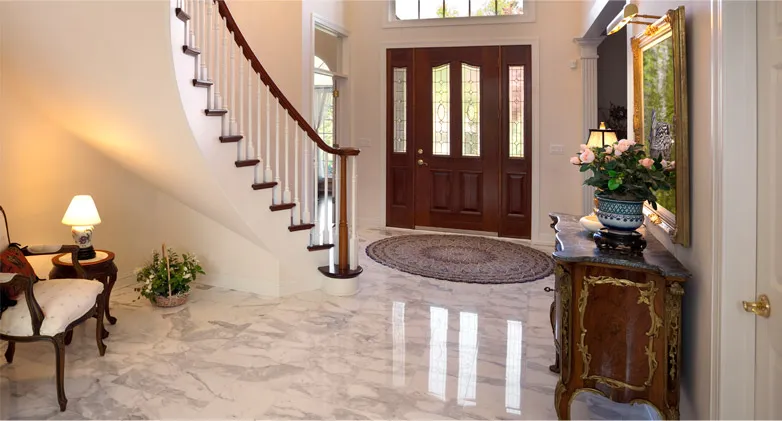
Marble polishing is the process of grinding and buffing a marble surface with progressively finer diamond abrasives until its natural crystalline structure reflects light evenly again, producing a true mirror-like shine. It reverses dulling caused by foot traffic, acidic spills, and worn wax coatings without replacing a single square foot of stone.
How Does Marble Polishing Restore Shine?
Marble polishing works by mechanically leveling the microscopic peaks and valleys that etching, scratching, and years of wear create on the stone’s surface. We start with coarser diamond abrasive pads to remove deep etch marks and scratches, then move through a sequence of progressively finer grits that refine the surface to a smooth, reflective finish. For a true high-gloss result, a polishing powder or crystallizer is often worked into the final pass, chemically reacting with the calcium carbonate in the marble to harden the surface and enhance clarity. Throughout the process we control water flow and pad pressure to avoid overheating the stone or creating new swirl marks. Once the shine is restored, we apply a penetrating sealer so future spills bead up instead of etching the surface again. Most rooms are completed in a single day, and results typically last one to three years before a touch-up is needed.
Signs Your Marble Needs Polishing
- Dull, cloudy, or hazy patches instead of a mirror-like reflection
- Visible etch marks (light gray or white rings) from acidic spills
- Fine scratches from foot traffic, furniture, or grit
- An uneven sheen across the surface
Polishing is different from repair or resurfacing — it’s a maintenance-level service best suited to marble that is structurally sound but has lost its shine. Deeper cracks, chips, or pitting call for our marble repair and restoration service instead. Regular polishing every one to two years keeps countertops, floors, and vanities looking freshly installed despite the Coachella Valley’s dry climate and dusty conditions.
Frequently Asked Questions
How Often Should Marble Be Polished?
Most homes benefit from professional polishing every one to two years, though high-traffic floors and kitchen countertops exposed to acidic foods may need attention sooner. Daily use of a pH-neutral cleaner and prompt spill cleanup between polishing visits helps preserve the shine longer.
Can Polishing Remove Deep Scratches or Etch Marks?
Light to moderate etching and surface scratches respond well to polishing. Deeper gouges, chips, or cracks require repair work first, since polishing alone only levels the surface and won’t fill in missing material.
Will Polishing Make My Marble Floor Slippery?
A properly polished marble floor is smooth and reflective, but we can adjust the final finish level or apply an anti-slip treatment on request, particularly in bathrooms, entryways, or homes with young children or older adults.
Ready to get started?
Contact Wesley Preston Restoration today for a free, no-obligation quote. CA Contractor License #960526.