


Restoration vs. Replacement: A Homeowner's Decision Guide
TL;DR: When a surface looks worn - marble, tile, granite, or a concrete floor - the instinct is often to replace it. But replacement is the expensive, disruptive option, and it's frequently unnecessary. Most surfaces fail at the top layer while the material beneath stays sound, which means restoration can deliver the same like-new result for far less money and mess. Replacement only wins when the material is structurally broken or you specifically want something different. This guide gives you a clear framework to decide.
Few home decisions feel as black-and-white as a tired floor or countertop: it looks bad, so it must need replacing. In reality, the choice between restoring and replacing is one of the most consequential - and most often misjudged - calls a homeowner makes. Get it right and you save thousands and a week of disruption. Get it wrong and you pay to tear out a surface that just needed refreshing.
This guide lays out a simple, honest framework: how to tell whether the damage is cosmetic or structural, what each path costs you in money and disruption, and which surfaces are the best candidates for restoration.
What's the core difference between restoration and replacement?
Restoration repairs and renews the surface you already have; replacement removes it and installs something new. Restoration grinds, polishes, regrouts, recoats, or reseals existing material to bring it back to like-new condition. Replacement involves demolition, disposal, new material, and reinstallation. Restoration is almost always faster, cheaper, and less disruptive - when the underlying material is sound.
The reason this distinction matters so much is that most surfaces don't truly "wear out." They accumulate surface damage - etching, scratches, dull spots, stained grout, faded coatings - while the marble, granite, tile body, or concrete slab underneath remains structurally fine. Restoration targets exactly that surface layer. Replacement throws away sound material along with the damaged surface, which is why it should be the considered choice, not the reflex.
How do you tell if damage is cosmetic or structural?
The deciding question is whether the material itself has failed or just its surface. Cosmetic damage - dullness, etching, scratches, stains, faded finishes, discolored grout - lives on the surface and is restorable. Structural damage - cracks through the material, broken or missing pieces, failed bonds, substrate problems - means the material itself is compromised and may need replacement.
A quick self-assessment by surface:
- Marble & granite: Dull, etched, or scratched stone is cosmetic and restorable. Cracked-through slabs or large missing sections lean toward replacement.
- Tile & grout: Stained or cracked grout with sound, well-bonded tile is restorable. Cracked tile bodies, loose or hollow-sounding tiles, or a failing substrate point to replacement.
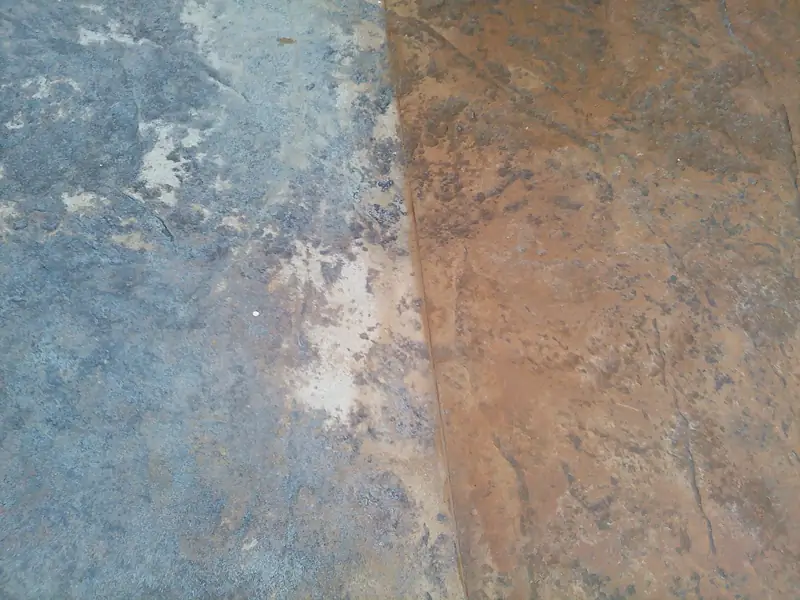
- Concrete & coated floors: Dusting, staining, surface pitting, and worn coatings are restorable. Deep structural cracking or major slab movement may need more than a coating.
If your damage falls in the cosmetic column - and most does - restoration is very likely the right path. When you're unsure, a professional assessment settles it before you commit to demolition.
Restoration vs. replacement: cost, time, and disruption
On nearly every practical measure, restoration costs less, takes less time, and disrupts your home less than replacement. Replacement adds demolition, debris disposal, new material, and reinstallation - plus the risk of collateral damage to cabinets, walls, and trim. Restoration works within your existing surfaces, so the project footprint stays small.
| Factor | Restoration | Replacement |
|---|---|---|
| Relative cost | Lower | Higher |
| Typical timeline | Often 1 day to a few days | Several days to weeks |
| Demolition & debris | None or minimal | Significant |
| Disruption to home | Low | High |
| Risk to surrounding areas | Low | Higher |
| Keeps original material | Yes | No |
| Best when | Surface damage, sound material | Structural failure or design change |
The pattern is consistent across materials: when the underlying material is sound, restoration delivers the result you actually want - a clean, like-new surface - without the cost and upheaval of starting over.
When is replacement actually the right call?
Replacement is the right choice when the material is structurally compromised or when restoration simply can't achieve your goal. That includes stone cracked through its body, tile that's loose or hollow across large areas, a failing substrate causing ongoing movement, or water damage that's reached the structure. It's also the answer when you want a genuinely different material, size, or layout.
Choose replacement when:
- The material itself is broken - cracked through, crumbling, or missing significant pieces.
- The bond or substrate has failed, so a new surface finish won't hold.
- There's structural water or moisture damage beneath the surface.
- You want a different look that restoration can't produce - a new material, a different tile size, a changed footprint.
In these situations, replacement is the honest, durable answer, and restoration would only be a short-lived patch. The goal isn't to avoid replacement at all costs - it's to avoid replacing things that didn't need replacing.
How restoration protects your home's value
Restoration protects value by keeping surfaces in like-new condition without the cost and risk of replacement, and well-kept finishes are exactly what buyers and appraisers reward. Bright marble, crisp grout, and clean floors signal a maintained home and photograph well for listings. Restoration delivers that impression efficiently, freeing budget for other improvements.
There's also a sustainability and practicality angle that resonates with many homeowners: restoration keeps sound material out of the landfill and avoids the ripple-effect costs of demolition - the disturbed cabinetry, the repainting, the days of a home in disarray. Whether you're preparing to sell across the Coachella Valley or simply want your home to look its best for years to come, restoring sound surfaces is usually the higher-return, lower-stress path.
A simple framework to decide
Decide in three steps: identify whether the damage is cosmetic or structural, weigh cost and disruption against the result you want, and get a professional assessment when you're unsure. If the material is sound and the damage is on the surface, restore. If the material is broken or you want something genuinely different, replace. When in doubt, don't demolish before you've had it evaluated.
The most expensive mistakes happen when homeowners skip that middle step and assume a worn surface equals a ruined one. Across marble, granite, tile, and concrete, the surfaces that look the worst are frequently the best restoration candidates - because the damage you see is sitting on top of material that's still perfectly sound. A short, honest assessment is the cheapest insurance against paying for a tear-out you never needed.
You can explore the specific paths by surface - marble and stone restoration, tile and grout restoration, and epoxy and concrete floor coatings - or simply have the surface evaluated before you decide.
Restore or replace? Find out before you demolish.
Don't pay to tear out a surface that just needs refreshing. Wesley Preston Restoration has helped Coachella Valley homeowners make the restore-or-replace call since 2003 - across marble, granite, tile, and concrete.
📞 Call (760) 459-8001 or request an honest assessment. We'll tell you which path genuinely makes sense for your home - even when that's not the bigger job.
Frequently Asked Questions
Is restoration always cheaper than replacement?
In the large majority of cases, yes. Restoration avoids demolition, debris removal, new material, and reinstallation, so it typically costs significantly less. The main exception is when the material is structurally broken - then restoration would be a short-lived patch, and replacement becomes the better long-term value.
How do I know if my surface can be restored?
The key question is whether the damage is cosmetic or structural. Dullness, etching, scratches, stains, and discolored grout are surface issues and usually restorable. Cracks through the material, loose or missing pieces, and failed substrates are structural and may need replacement. A professional assessment confirms which you have.
Does restoration last as long as replacement?
When the underlying material is sound, a quality restoration delivers durable, long-lasting results - you're renewing material that's still structurally good. Longevity depends on the surface, the work quality, and maintenance. Restoration only falls short when it's used to mask a structural problem that truly required replacement.
Will restored surfaces look as good as new ones?
In most cases, yes. Restoration physically removes surface damage and rebuilds the finish, so marble can be re-polished to a gleam, grout renewed, and floors recoated to like-new condition. Because it renews the genuine material, the result often looks indistinguishable from new at a fraction of the cost.
How much disruption does restoration cause?
Far less than replacement. Most restoration involves no demolition, so there's minimal debris and little risk to surrounding cabinets, walls, and trim. Many jobs are completed in a day to a few days. Replacement, by contrast, means tear-out, disposal, and reinstallation that can stretch for days or weeks.
When should I definitely replace instead of restore?
Replace when the material itself has failed - cracked through, crumbling, loose, or missing large sections - or when the substrate beneath has failed and a new finish won't hold. Replacement is also the answer when you want a genuinely different material, size, or layout that restoration can't deliver.
Can restoration help when I'm selling my home?
Yes. Buyers and appraisers respond to condition and first impressions, and bright, well-maintained surfaces photograph well and signal a cared-for home. Restoration delivers that look efficiently, often freeing budget for other pre-sale improvements. It removes objections without the cost and timeline of replacement.
Is restoration better for the environment?
Generally, yes. Restoration keeps sound material in place rather than sending it to a landfill and avoids the resource use tied to manufacturing and installing new material. For homeowners who value sustainability, renewing existing surfaces is usually the lower-impact choice when the material is still structurally sound.
What surfaces can be restored rather than replaced?
Many common surfaces: marble and natural stone, granite countertops, tile and grout, and concrete or coated floors. Each has its own restoration process - polishing, honing, regrouting, sealing, or recoating - but the principle is the same: renew the surface layer while keeping sound material in place.
How do I get a restore-or-replace recommendation for my home?
Have the surface professionally assessed before committing to demolition. Wesley Preston Restoration evaluates marble, granite, tile, and concrete across Palm Springs, Palm Desert, Rancho Mirage, Indian Wells, La Quinta, Indio, Cathedral City, and the Coachella Valley. Call (760) 459-8001 for an honest recommendation on your specific surfaces.